
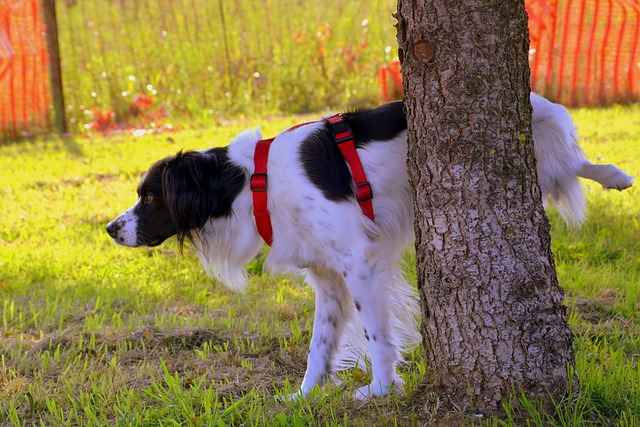

If your puppy is peeing too much, this blog will help you understand the possible reasons and their solutions. When you bring a little furry bundle of joy home, along with a lot of happiness, you also get the responsibility of raising a baby. First couple of months are always difficult, as you are adjusting with the little baby in the house and his/her needs.
Just like human babies, puppies also need some time to grow and learn the control over urination and bowel movements. But of course, puppies take far less time than human babies. So yes, puppies pee a lot, just like most babies do, because they have a small bladder. But if your puppy is peeing way too much than other puppies, it should be taken as a sign of a problem.
Puppy Peeing Too Much: Reasons
Once they fill themselves with water, they need to relieve themselves within 10 to 30 mins. Puppies less than 6 months need to be taken out for peeing every 1 to 2 hours. At night, if your puppy sleeps after peeing, he/she won’t disturb you until morning (early morning, say 6am).
It is believed that puppies can hold their pee for the number of hours equivalent to their number of months. This formula is valid for puppies aging upto 9 months. For example, if your puppy is 1 month old, he/she can hold for 1 hour; and if puppy is 8 months old, he/she can hold for 8 hours. An adult dog can easily hold for 8 hours, so you will need to go out thrice.
So, we can conclude that if your 6 months old puppy is peeing every 1 to 2 hours, there is some problem. You must consult your vet if this is not a one-day situation and has become a routine.
Possible health problems that may cause too frequent urination are UTI (Urinary Tract Infection), kidney problem, diabetes, bladder stones, kidney stones, some medicines, tumors, or any other issue.
Physically healthy pups may pee too much because of psychological issues such as anxiety, attention seeking disorder, difficulty in learning the rules of where to pee, etc.
Puppy Peeing Too Much: Solutions
Crate Training: Keep your puppy in a crate for the duration when you cannot attend him/her. Puppies tend to avoid making any mess at their sleeping/resting place. So, instinctively, they will hold it until you take them out. Initially, you will have to let them out every 1 or 2 hours, but gradually this duration increases as they age. However, if your puppy has an accident in the crate, make sure that you clean very thoroughly. If any odours linger, the puppy might do it again.
Belly Bands and Diapers: Belly bands useful with male puppies and diapers are good for females. You can use these products to reduce the messy situations. Both of these products have an absorbing pad or liner inside. Some belly bands are reusable, so you can wash them as well. These products are more hygienic than cleaning the floor constantly.
Lengthen the Walks: If your puppy pees instantly after coming back from the walk, you may want to elongate the duration. This will help the puppy with more time to understand his/her requirement to pee.
Obliterate Odours: Puppies or dogs, they tend to pee and poo at the spot where they have done it before. If your dog has done his/her business at the place where you don’t want it to happen again, obliterate the odour completely. Use sprays that can remove the residue of odour as well, especially on the carpets.
How DuePet Can Help
The DuePet app has a wee tracker feature, which is very helpful in tracking the changes in the wee pattern. You can create a daily, weekly journal, which will help your vet to assess your pet’s health better.
Apart from frequent peeing, your pup’s wee is capable of telling about health in other ways; for example, changes in odour are also a sign of health problems.
DuePet app is very rich in features. You must check out the details: DuePet Mobile App Features
Download DuePet’s iOS App Now Download DuePet’s Android App Now
FAQs
Every 5 minutes is absolutely unhealthy; either your puppy is suffering from a physiological problem, or it is a psychological problem.
Give your puppy crate training. Let the puppy out as much as you can and that too for a longer duration.
It is believed that puppies can hold their pee for hours equivalent to their months. For example, if your puppy is 1 month old, he/she can hold for 1 hour; and if puppy is 8 months old, he/she can hold for 8 hours.
A 10 weeks old puppy needs to pee every 2 to 3 hours. Some puppies might need to pee every 45 mins.


