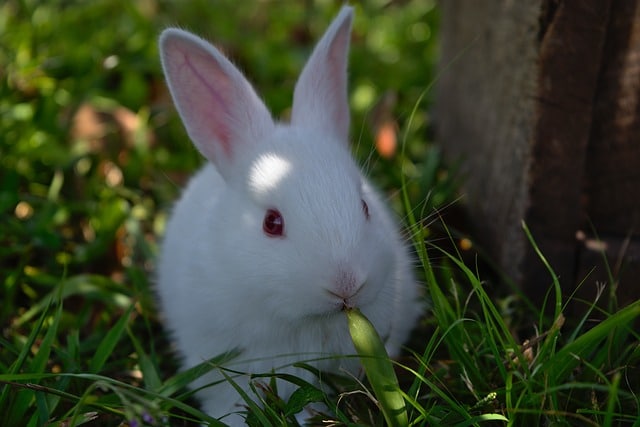

Rabbit food can be a tricky subject for many; especially after television and other media getting obsessed with rabbits eating carrot or lettuce all the time. This is absolutely untrue in real life, as carrots or lettuce cannot be a rabbit’s staple. There is a lot more to a rabbit’s diet that all rabbit lovers should know.{1}

“Grazers” is the right word for them, as they love to chew their food continuously. These bunnies have very complex digestive systems with a very efficient food processing mechanism along with specific dietary requirements. If you try to experiment with their diet, it may disturb their digestive system. Their digestive issues must not be neglected. If left untreated, it may be fatal.{4}
What to Feed Your Rabbit?
Hay is the one-word answer to this question.{4} An ideal rabbit daily diet includes:
- 80% grass hay
- 10% leafy greens
- 5% pellets
- 0% to 5% treats{1}
Let’s understand the hays more, as they make up for most of your bunny’s diet.

Hays Are the Rabbits’ Staple
You need to provide an unlimited supply of hays to your bunny, as they are the “grazers”. Some good grass hays are: oat hay, orchard grass, brome, and timothy. The hay should be fresh, free of any dust or molds. Among all the hays, alfalfa needs your special attention here because it is not technically grass, but legume. Your bunny should not take too many alfalfas, as it can be a bit heavy to digest. You also need to understand that alfalfa grass shouldn’t be completely eliminated from the diet because it is rich in protein and calcium. In case of younger bunnies, alfalfa can be very healthy during their growth period. So, you may not need to restrict the alfalfa quantity for the bunnies as young as 6 months old.{3}{1}

More You Need To Know About Hays
Among all the available as well as recommended hays, timothy is the best, as it is most fiber dense and also coarse. Some more hays that you can consider adding to your bunny’s diet are:
- Meadow
- Herbal
- Bluegrass
- Fescue ‘
- Marsh
- Ryegrass{1}
One most important thing to know about hays is that these are very rich in fiber and keep the digestion of bunnies fine. Additionally, good hays help in wearing down the teeth, as rabbit-teeth grow continuously.{2}
Necessary Details About Other Rabbit Foods
Hoping that the previous paragraph contained enough details about hays. It’s time to move on to other required food items: leafy greens, pellets, and treats.
As far as leafy greens are concerned, not all are very suitable for your rabbit’s digestion, as some of these greens are rich in oxalic acid. Some of these toxic greens are beet greens, chard, mustard greens, parsley, radish greens, spinach, kale, and few more. Use DuePet’s food tracker to find out how each meal is going with your bunny.
If we talk about pellets, they are not really necessary. But, bunnies love pellets; and adding some of these to the diet can add extra nutrition. If you are getting those delicious pellets to your bunny, make sure that it doesn’t make more than 5% of the daily diet. If you are not sure which pellets’ brand to go for, consider checking the ingredients, which must be close to this:
- Fiber content should be 18% or higher
- Protein should be 12% to 14%
- Fat should be 3% or less
Surely, you now know enough about rabbit food. While looking after all these dietary needs, make sure that your bunny is getting enough water as well.
The Rabbit Food Discussion Doesn’t End Here
Before we close this discussion about rabbit food, there is something very important that we haven’ talked about already: Treats!
Rabbits have a sweet tooth and they love sweet fruits. Do not think about giving them anything with sugar. The natural sweetness of fruits is more than the required amount of sweetness for a rabbit; and little extra sweetness can affect your rabbit’s digestion adversely. So, it is advised to keep the quantity small. As the name suggests, treats should be offered to the rabbits on special occasions only.
Overall, there are many things that your rabbit can eat or not eat. All you need is to ensure that your rabbit is mostly eating the right things, rest can be managed. Some of the things that you must avoid letting your rabbit eat are:
| Almonds | Apple seeds | Artichoke leaves |
| Lentils | Avocados | Dairy |
| Mushrooms | Beans | Noodles |
| Nuts | Olives | Onions |
| Bread | Pasta | Candy |
| Yogurt | Peanuts | Cereal |
| Cheese | Popcorn | Potatoes |
| Chocolate | Coffee | Corn |
| Quinoa | Corn husks | Crackers |
| Rhubarbs | Currants | Rice |
| Dates | Seeds | Edamame |
| Eggs | Figs | Garlic |
| Sweet potatoes | Tomato leaves | Green onions |
| Honey | Walnuts | Hot peppers |
Not All Plants Are Good Rabbit Foods
Even though there could be a couple of few more things that are not good for your bunny, this list above might be helpful in keeping your bunny just fine. In case you have plants at home, consider checking out which ones might prove unhealthy for the little bunny. Some of these not-so-rabbit-friendly plants are aloe vera, ivy, jasmine, lilies, mistletoe, daffodil, nightshade, oak leaves, eucalyptus, poppies, geranium, hyacinth, hydrangea, yucca, etc.{1}

If you want to ensure an optimum health for your rabbit, download DuePet’s mobile app now; because tracking your pet’s health is very helpful in maintaining wellness. Also, vets are able to diagnose health issues better with the tracked records.
Download DuePet’s iOS App Now Download DuePet’s Android App Now
FAQs
Rabbits need to eat grass continuously; mostly timothy grass. Some leafy greens are also required.
Yes, but in moderation because bananas are sweet and too much sweetness can adversely affect rabbits’ digestion.